Meet Good Business Colorado's 2026-27 Policy Council
With the 2026 election behind us, attention turns to the State Capitol, where the 2027 legislative session opens on Monday, January 11. During the legislative session, Good Business Colorado's Policy Council will help decide which bills the organization supports, opposes, or works to amend. Meet the five small business leaders serving on the 2026-27 council, in their own words, and the issue each one says Colorado owners should be watching.
What the Policy Council does
The Policy Council is the center of Good Business Colorado's legislative advocacy. It brings together business leaders from a range of industries to help shape policy and push for values-driven solutions at the Capitol. The council decides which bills Good Business Colorado formally endorses, with a focus on five areas:
Affordable housing
Healthcare
Taxes and regulations
Climate, renewable energy, and public lands
Equity and justice
The Council works alongside the organization's lobbying partner, Salazar & Associates.
The main job of the Council is to review proposed bills for their impact on small businesses, then recommend whether Good Business Colorado should support them, oppose them, or push for changes to the wording.
Meet the council
Jervis DiCicco, ProsperBridge and the Center for Community Wealth

Jervis works on both sides of the paycheck. As CEO of ProsperBridge, he and his team give workers one-on-one help to increase cash flow, get out of debt, and build essential savings, closing what he calls "the gap between paychecks and economic mobility." At the Center for Community Wealth, he helps local businesses scale, consider worker ownership, and gain access to commercial real estate ownership.
Why he serves. "Policy impacts all of us. GBC's Policy Council gives me the opportunity to understand each year's legislation and participate in policy-making that can help build a Colorado economy where everyone can thrive."
What to watch. "I think the biggest issue will be the proposal to shift to a graduated income tax system, especially since most Colorado small businesses operate as pass-throughs." Pass-through businesses, which include sole proprietorships, partnerships, S corporations, and most LLCs, report business income on the owner's personal return, so a change to personal income tax rates reaches them directly. Jervis also pointed to the cumulative weight of new rules: the state "continues to pass new regulations (many of which I support for larger businesses) that are placing a heavier compliance burden on already struggling small businesses. I'd like to see that change."
Jervis answered before Election Day, when the question went to voters as Amendment 87. The measure would replace Colorado's 4.4% flat income tax with six brackets from 3.7% to 8.4%, with rates above 4.4% applying only to income over $500,000. Voters weighed it alongside a competing income tax measure, Proposition 136. The two sides read the small business impact differently. The Tax Foundation argues that because many high earners have pass-through income, higher top rates work "as higher taxes on small business ownership." The Colorado Fiscal Institute, which supported Amendment 87, counters that higher rates apply only when an owner's taxable income reaches the top brackets, and that 98% of Coloradans who reported self-employment income in 2024 had personal income below $500,000.
Alisha Harris, Original Account Strategies
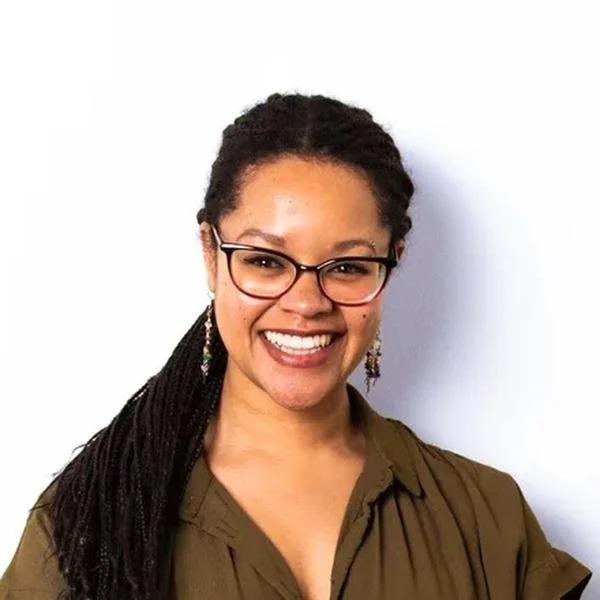
Alisha is CEO and Creative Director of Original Account Strategies, a Denver-based creative and design agency. The studio builds participatory experiences across physical and digital spaces that combine art, storytelling, and interactive technology.
Why she serves. She said the council gives her and her business "a way to shape our community in a way that is beneficial for us to mutually thrive."
What to watch. Taxes and fees. Compliance is the baseline, Alisha says, but owners should also follow proposals that would apply taxes and fees to small and large businesses in different ways.
Julia Korns, JK Strategy LLC and B Local Colorado

Julia represents B Local Colorado, the volunteer board that connects Colorado companies with B Lab and B Corp certification. Its members range from small businesses to major corporations, and they all hold themselves to high standards for people, planet, and profit.
Why she serves. B Lab's new standards ask B Corps to take on collective action and policy advocacy, and Julia says many are still figuring out what that looks like. "I joined GBC's Policy Council to connect B Corps across the Mountain West with people already doing this work on the ground, so we can learn by showing up and getting involved."
What to watch. How AI and rising energy demand will shape Colorado's future, "especially after lawmakers failed to agree on data center rules in 2026." GBC covered where that fight went next in our blog post No State Rules, One Town at a Time. She said that "small business owners need to be in this conversation, because we have a powerful voice in deciding how our state manages its limited resources."
Güney Krenzien, Tanner Krenzien Insurance Agency

Güney is Business and Community Development Specialist at Tanner Krenzien Agency, an American Family Insurance agency serving individuals, families, and small businesses. As an LGBTQ+- and immigrant-owned business, the agency focuses on communities that haven't always felt understood or welcomed by the insurance industry, and backs that up through community leadership, support for local nonprofits, and event sponsorships.
Why he serves. A background in social entrepreneurship, public policy, and performance auditing taught Güney to ask who policies serve, how they work in practice, and whether they deliver meaningful results. Growing up in a country where basic rights were not equally accessible to minority communities led him to study public policy. "I believe business owners have both the opportunity and responsibility to use their influence, resources, and expertise to strengthen their communities and create opportunities for others."
What to watch. Access to affordable, adequate insurance. Güney and his husband are both rare cancer survivors, and navigating the health care system shaped their decision to become business owners. "Whether it's health, home, auto, workers' compensation, or life insurance, access to quality coverage should not depend disproportionately on a person's employer or ZIP code." He would like policy discussions to look past affordability to "investments in risk reduction and community resilience, helping small businesses protect their employees, assets, and long-term financial well-being."
Laura Morocco, The Monday Lab
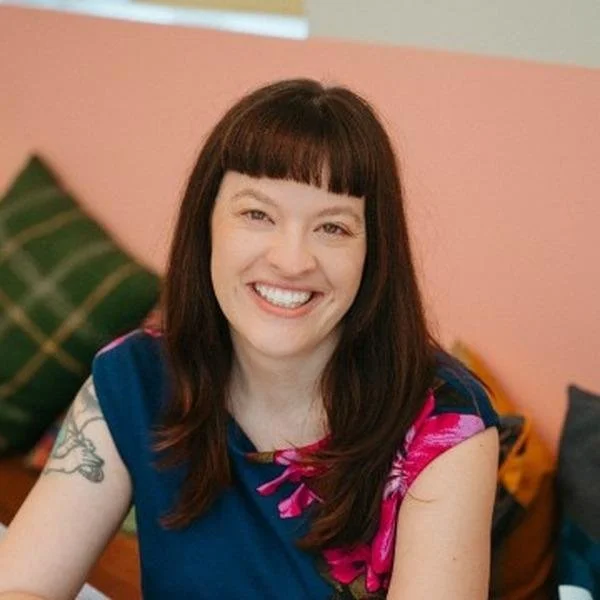
Laura runs The Monday Lab, a microbusiness that offers operations and people support to mission- and values-driven companies. She helps owners and founders build strong systems and a respectful, engaging company culture. She has been a Good Business Colorado member for several years and has served on the board since 2024.
Why she serves. Microbusinesses. Federal definitions of "small" are broad. The U.S. Small Business Administration sets size standards by industry, and most manufacturers with 500 or fewer employees qualify. The SBA's Office of Advocacy generally counts any independent business with fewer than 500 employees as small. Laura worries that range hides real differences. "By lumping such a vast range together, policymakers with no business experience may overlook the realities of limited budgets, funding, staffing, and administrative capacity for microbusinesses. Even well-intentioned pro-small business legislation can inadvertently chill small business growth."
What to watch. Merchant swipe fees. Card networks and banks charge a fee on each credit and debit transaction, and Laura notes that merchants still pay that fee on the sales tax portion of a sale, money the business collects for the state. Lawmakers tried to change that this year. SB26-134 would have barred card networks from charging the fee on the sales tax portion of a transaction. It passed the Senate 18-17 and the House 44-20, with the Colorado Restaurant Association and NFIB in support and the Colorado Bankers Association opposed. According to the House sponsors, Colorado businesses paid $217 million in swipe fees on sales tax in 2024. Governor Polis vetoed the bill on June 3, citing "too much legal risk" and "limited upside for our small businesses." Laura has read the idea may return in 2027, and she would like to see "a new strategy to re-introduce modified merchant fee relief."
Get involved!
Read more about the council and its past work on the Policy Council page.
Tell the council what you're watching. If a bill or rule would change your costs, staffing, or paperwork, email us at info@goodbusinessco.org and put Policy in the subject line.
Follow bills once the session opens on the Colorado General Assembly website, where you can search by topic, and see the legislature's public testimony options for weighing in on bills in committee.
Catch up on Level Up Academy 2026, where members dug into healthcare costs, AI, and data centers, on the Good Business Colorado YouTube channel.
Subscribe to GBC’s email list for session updates.
The 2027 session opens Monday, January 11. Between now and then, the Policy Council will be reading bills with these five issues in mind. If you think one belongs on the list that isn't here, let us know.